What Happens If You Don't Remove a Tree Stump from Your Yard?
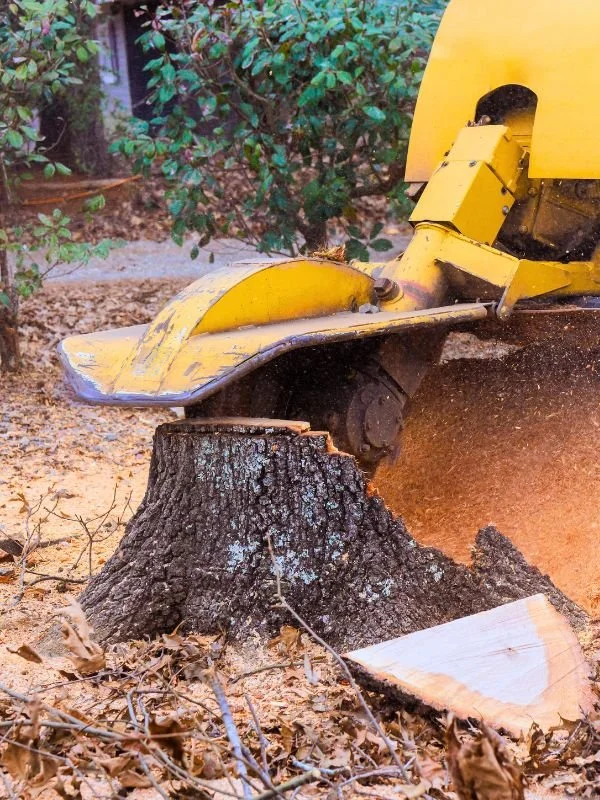
After a tree comes down, most homeowners are so relieved to have the trunk and branches gone that the stump barely registers as a concern. It is flush with the ground, or close to it, and it looks like it will just sit there and slowly rot away on its own. That assumption is understandable, but it is also where a lot of expensive problems begin. What is happening below the surface of that stump, in the root system and in the wood itself, can affect your property in ways that do not show up for months or even years. Here is what actually happens when a tree stump gets left in the ground, and why stump grinding is worth doing sooner rather than later.
Can a Tree Stump Keep Growing After the Tree Is Cut Down?
Yes, and this is one of the things that surprises homeowners the most. Many tree species can send up new shoots from the stump and root system long after the trunk has been removed, a process called suckering or resprouting. Deciduous hardwoods are especially persistent. Some species can begin resprouting within a few months of being cut, and others may push new growth for years if the root system remains intact and viable. These new shoots are not just cosmetic nuisances. They draw energy from the existing root network, which means the roots stay active and continue growing underground. If the original tree was removed because of proximity to your house, driveway, fence, or sewer line, leaving the stump in place allows the very root system you were trying to get rid of to keep expanding. Grinding the stump eliminates the growth point and accelerates the die-off of the remaining roots, which is the whole reason the tree was removed in the first place.
Do Tree Stumps Attract Termites and Other Pests?
A decaying tree stump is one of the most attractive habitats for termites, carpenter ants, beetles, and other wood-boring insects in a residential yard. As the wood softens and retains moisture, it creates exactly the kind of dark, damp, protected environment that subterranean termites seek out for nesting and colony expansion. A stump does not need to be visibly rotting to attract them, either. The decay process begins internally long before the exterior shows obvious signs of deterioration. The real concern is not the stump itself but what happens next. Termite colonies established in a stump will forage outward through the soil, and if your home, deck, fence, or outbuilding is within range, they will find it. According to the U.S. Forest Service, tree roots are responsible for more than 50 percent of all sewer blockages, and the same underground pathways that roots follow can serve as highways for subterranean termite activity. Carpenter ants behave similarly, hollowing out damp wood to build satellite colonies that can eventually reach structural lumber in your home. Removing the stump removes the staging ground.
Can Old Tree Roots Damage Your Foundation, Driveway, or Sewer Line?
Tree roots do not stop growing the moment the trunk is cut. In many cases, the root system remains alive for years, and certain species maintain active root growth even without a living canopy above. Those roots can continue to push against foundations, lift sections of driveway or sidewalk, and infiltrate sewer lines through small cracks and pipe joints. The roots are drawn to moisture, and sewer pipes are some of the most nutrient-rich, moisture-heavy targets in the soil around your home. Older homes with clay or cast iron sewer pipes are especially vulnerable because those materials develop cracks and joint separations over time that roots exploit easily. Once a root enters a pipe, it grows rapidly in the nutrient-dense environment inside, eventually creating blockages that cause slow drains, sewage backups, and in severe cases, pipe collapse. Stump grinding does not remove the entire root system, but it kills the growth center of the tree and causes the roots to begin decomposing rather than expanding. For properties where roots were already a concern before the tree was removed, grinding the stump is a critical step in stopping further damage.
Will a Tree Stump Spread Disease or Fungus to Healthy Trees?
If the tree was removed because of disease or fungal infection, leaving the stump in the ground can allow those pathogens to persist and spread to nearby healthy trees through root contact or soil contamination. Fungal organisms like Armillaria (commonly called honey fungus or oak root fungus) are particularly aggressive in this regard. Armillaria spreads through the soil via dark, root-like structures called rhizomorphs, and a single infected stump can serve as a source of contamination for years. This is especially relevant in Redding and the surrounding Shasta County area, where oak species are common and Armillaria is well established in local soils. If you had an oak or another susceptible species removed due to decline, leaving the stump in place is essentially leaving the infection in the ground. Grinding the stump and removing as much of the root crown as possible reduces the fungal habitat and limits the organism's ability to spread to neighboring trees on your property or your neighbor's.
Does an Old Tree Stump Create a Liability or Safety Hazard?
A tree stump in your yard is a tripping hazard, and that liability belongs to you as the property owner. Stumps that are cut close to the ground are easy to miss, especially in tall grass, low light, or unfamiliar areas of the yard. Visitors, children, mail carriers, utility workers, and anyone else walking through your property can catch a foot on a stump they did not see, and the resulting injury can become your responsibility. Beyond the tripping risk, old stumps also attract bees, wasps, and yellowjackets that nest in the decaying wood or in the cavities left behind by root decay. A yellowjacket nest built inside or alongside a rotting stump can go unnoticed until someone steps too close, and ground-nesting wasps are notoriously aggressive when disturbed. Grinding the stump eliminates both the physical hazard and the habitat that attracts stinging insects.
How Long Does It Take for a Tree Stump to Decompose on Its Own?
Natural decomposition of a tree stump can take anywhere from three to ten years depending on the species, the size of the stump, the climate, and soil conditions. Hardwoods like oak decompose much more slowly than softwoods like pine, and larger stumps with extensive root systems take significantly longer to break down than smaller ones. In the dry heat of a Redding summer, decomposition slows even further because the fungi and bacteria that break down wood need consistent moisture to do their work. During that entire decomposition window, the stump is doing all the things described above: attracting pests, harboring disease, feeding root growth, and sitting in the middle of your yard as a tripping hazard. Stump grinding reduces a stump to wood chips and soil in a matter of hours, and the ground can be leveled, backfilled, and planted over almost immediately. Waiting years for nature to handle it is rarely worth the risks that accumulate in the meantime.
Frequently Asked Questions
How soon after tree removal should I grind the stump?
There is no required waiting period. You can grind a stump the same day the tree comes down, and doing it during the same visit is usually the most cost-effective approach since the crew and equipment are already on your property. If the stump has been sitting for months or years, it can still be ground out at any time. The sooner it is done, the less opportunity there is for pest colonization, root regrowth, or disease spread.
Does stump grinding remove the roots too?
Stump grinding removes the stump and the top portion of the major roots down to several inches below ground level, but it does not extract the entire root system. The remaining roots will gradually decompose over the following years as they lose their connection to the stump. In most residential situations, this natural die-off is sufficient and does not cause further problems. If roots were already infiltrating a sewer line or pressing against a foundation, grinding the stump stops the growth and allows the existing roots to begin breaking down rather than continuing to expand.
What is left in the ground after stump grinding?
After grinding, the hole is filled with a mix of wood chips and soil from the grinding process. This material can be raked level and left to settle, or it can be topped with additional soil and planted with grass seed, sod, or a new tree. The wood chips will decompose over time, which means the area may settle slightly and need a top-up of soil in the following year. If you plan to plant a new tree in the same spot, it is best to remove some of the wood chip material and replace it with quality topsoil so the new roots have the nutrients they need.
Can I just cover the stump with dirt instead of grinding it?
Covering a stump with dirt does not solve any of the underlying problems. The wood will still decay, still attract pests, and still support root activity beneath the surface. It may even accelerate pest issues by trapping moisture against the wood. The stump will also continue to settle unevenly as it decomposes, creating dips and soft spots in the ground above it. Grinding is the only way to fully address the stump below grade and reclaim the space.
How much does stump grinding cost?
Cost depends on the size and location of the stump, the number of stumps on the property, and whether access is straightforward or requires additional setup. A single small to mid-sized stump in an open area is a relatively quick job, while larger stumps, stumps near structures, or properties with multiple stumps take more time and equipment. We provide free on-site estimates so you know exactly what the work will cost before anything starts.
Have a stump that needs to go? Call All Aspect Tree Service for a free estimate. We provide professional stump grinding throughout Redding, Anderson, Shasta Lake, Cottonwood, Palo Cedro, Red Bluff, Shingletown, Burney, and the wider Shasta and Tehama County area, with honest assessments and owner-led service.