If you own a home in Redding or anywhere in Shasta or Tehama County, there is a real chance your insurance company has already looked at your property from above and formed an opinion about your trees. Aerial imagery, drone surveys, and third-party property inspections have become standard tools for insurers reassessing risk in wildfire-prone areas, and Northern California is at the top of that list. Homeowners who have never filed a claim and have paid their premiums on time for years are receiving non-renewal notices, policy condition letters, and requests for vegetation clearance that they were not expecting.
This is not a hypothetical problem. It is happening across the region right now, and in many cases, the issue comes down to trees and brush that the homeowner either did not realize were a concern or had been putting off dealing with.
Why Are Insurance Companies Canceling Policies Over Trees?
Insurance companies are canceling and non-renewing policies in Northern California because wildfire losses have forced them to reassess which properties they are willing to cover. The Carr Fire in 2018 burned through parts of Redding and destroyed more than 1,600 structures, and that event changed the way insurers evaluate risk across the entire region. Properties that sit in or near wildfire hazard zones now get far more scrutiny than they did ten years ago, and the condition of the trees and vegetation on your lot is one of the first things they look at.
What insurers are evaluating is not just whether your property is in a fire zone. They are looking at how much fuel is on and around your lot, how close that fuel is to your home, and whether you have taken steps to reduce the risk. A property with overgrown brush piled against the fence, dead trees within striking distance of the roof, and unmaintained vegetation along the driveway looks very different to an underwriter than one with proper clearance and well-maintained trees.
What Does Your Insurance Company Actually Want You to Do to Prevent Fire?
Most insurers are looking for compliance with California's defensible space guidelines, which are broken into three zones around your home. Zone 0 covers the first five feet from the structure and requires the most aggressive clearance, including removing combustible plants, mulch, and debris directly against the house. Zone 1 extends from five to thirty feet and calls for well-spaced trees, trimmed canopy, cleared brush, and the removal of dead or dying vegetation. Zone 2 covers thirty to one hundred feet and focuses on reducing the density of trees and brush so that fire cannot easily travel toward the structure.
When an insurance company sends you a letter about vegetation clearance, they are typically asking for some combination of the following:
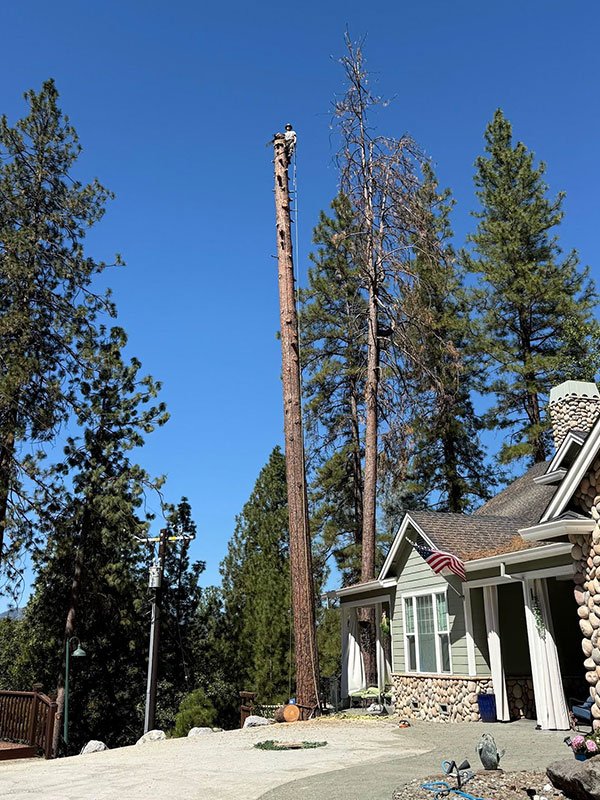
Removal of dead, dying, or hazardous trees near the home
Trimming tree canopy away from the roof, chimney, and overhanging structures
Clearing brush, dead vegetation, and debris piles within the defensible space zones
Removing low-hanging branches that could carry ground fire into the canopy (called "ladder fuels")
Maintaining separation between tree canopies so fire cannot jump from one to the next
Clearing vegetation along fences, driveways, decks, and outbuildings
The specifics vary by insurer, and some are stricter than others. But the general expectation is that your property shows evidence of active vegetation management and fire risk reduction.
What Happens If You Ignore the Notice?
Ignoring a clearance notice from your insurance company is one of the most expensive mistakes a homeowner can make. If your insurer gives you a deadline to complete vegetation work and you do not meet it, they can non-renew your policy at the end of the term. In some cases, they can cancel mid-term if the hazard is severe enough.
Once you have been non-renewed or canceled for fire risk, finding replacement coverage becomes much harder and much more expensive. Many standard carriers will not pick up a policy that another company dropped for vegetation or wildfire concerns, which means you may end up in the California FAIR Plan. The FAIR Plan is the state's insurer of last resort, and while it provides basic fire coverage, the premiums are significantly higher and the coverage is more limited than a standard homeowners policy. It is a safety net, not a long-term solution, and most homeowners who end up there want out as quickly as possible.
What Kind of Tree Work Helps You Stay Insured?
The good news is that most of the tree and vegetation work insurers want to see is straightforward and can be done in a single visit or a short series of appointments depending on the size of the property. The goal is not to clear-cut your lot or remove every tree. It is to show that you are actively managing fire risk by keeping trees healthy, properly spaced, and clear of structures.
The most common work we do for homeowners dealing with insurance clearance requests includes:
Hazardous tree removal where dead, dying, or structurally compromised trees are within range of the home or other structures
Crown raising and canopy trimming to eliminate ladder fuels and create vertical separation between ground vegetation and the tree canopy
Brush and debris hauling to clear accumulated dead material from around the home, fences, decks, and outbuildings
Vegetation management across the property to reduce fuel density in Zones 1 and 2
Stump grinding to remove trip hazards and eliminate decaying wood that can harbor pests and add fuel load
Field and lot clearing for properties with larger acreage or overgrown areas that have not been maintained
After the work is complete, many homeowners take photos and document the clearance to send to their insurance company as evidence of compliance. We are happy to walk you through what was done so you can communicate it clearly to your insurer.
How Do You Know If Your Property Is at Risk of a Non-Renewal?
You do not always get a warning before it happens, but there are some signs that your property may be on your insurer's radar. If you live in a designated wildfire hazard zone, if your home backs up to open land or heavy tree cover, if you have had a previous claim related to fire or fallen trees, or if your property has not had professional tree or vegetation work in several years, you are more likely to receive a review or a non-renewal notice.
Properties in rural and semi-rural areas of Shasta and Tehama County tend to be at higher risk simply because lot sizes are larger, vegetation is denser, and there is more ground to maintain. But even properties inside Redding city limits have been flagged, especially in neighborhoods that border wildland areas or that were affected by past fire events.
If you have not received a notice, that does not mean you are in the clear. Getting ahead of the problem with proactive clearance and tree maintenance is one of the best things you can do to protect both your property and your ability to keep affordable coverage.
Can Clearing Your Property Help You Get Insurance Back?
In many cases, yes. If your policy was non-renewed because of vegetation or fire risk concerns, completing the recommended clearance work and documenting it can help you reapply with your previous carrier or qualify with a new one. Some insurers will reinstate coverage or offer a new policy once they can verify that the property has been brought into compliance with defensible space standards.
This is not guaranteed, and every insurer handles it differently, but we have seen homeowners in Redding and the surrounding areas successfully get back into standard coverage after completing professional tree removal, brush clearing, and vegetation management on their properties. The key is doing the work thoroughly, documenting it clearly, and being able to show that ongoing maintenance is part of the plan.
Frequently Asked Questions
How quickly do I need to respond to an insurance clearance notice?
Deadlines vary by insurer, but most give you somewhere between 30 and 90 days to complete the requested work and provide documentation. Do not wait until the last week. Tree service companies in fire-prone areas get booked up fast during clearance season, and scheduling can take time, especially for larger properties.
Will my insurance company tell me exactly which trees to remove?
Usually not. Most notices use general language about vegetation clearance, defensible space, and fire risk reduction rather than identifying specific trees. That is where a professional assessment helps. We can walk your property with you, identify which trees and vegetation are creating the risk your insurer is concerned about, and give you a clear plan for addressing it.
How much does fire clearance cost?
It depends entirely on the size of the property, the amount of vegetation that needs to be removed, and whether the job involves hazardous tree removal, crane work, or heavy brush clearing. A small residential lot with a few trees to trim and some brush to haul will cost significantly less than a multi-acre rural property that has not been cleared in years. We provide free on-site estimates so you know exactly what the work will cost before anything starts.
Is fire clearance the same as defensible space?
Fire clearance and defensible space are closely related but not exactly the same thing. Defensible space refers to the specific zone-based requirements established by CAL FIRE for managing vegetation around structures. Fire clearance is a broader term that can include defensible space work plus additional vegetation management, lot clearing, and hazard tree removal. When your insurance company asks for fire clearance, they are generally asking for work that aligns with or exceeds defensible space standards.
Do I need fire clearance if I live inside Redding city limits?
Living inside city limits does not exempt you from fire risk or insurance requirements. Redding is surrounded by wildland areas, and many neighborhoods within the city sit in or adjacent to designated fire hazard zones. If your property has dense tree cover, unmaintained brush, or dead vegetation near structures, your insurer can still flag it regardless of whether you are inside city limits or not.
Concerned about your coverage or dealing with an insurance clearance notice? Call All Aspect Tree Service for a free on-site estimate. We help homeowners throughout Redding, Anderson, Shasta Lake, Cottonwood, Palo Cedro, Red Bluff, Shingletown, Burney, and the wider Shasta and Tehama County area get their properties into compliance with honest assessments and responsive, owner-led service.